المساهمون

السبت، 12 سبتمبر 2015

Number of men over 40 seeking cosmetic treatments on the rise, experts say


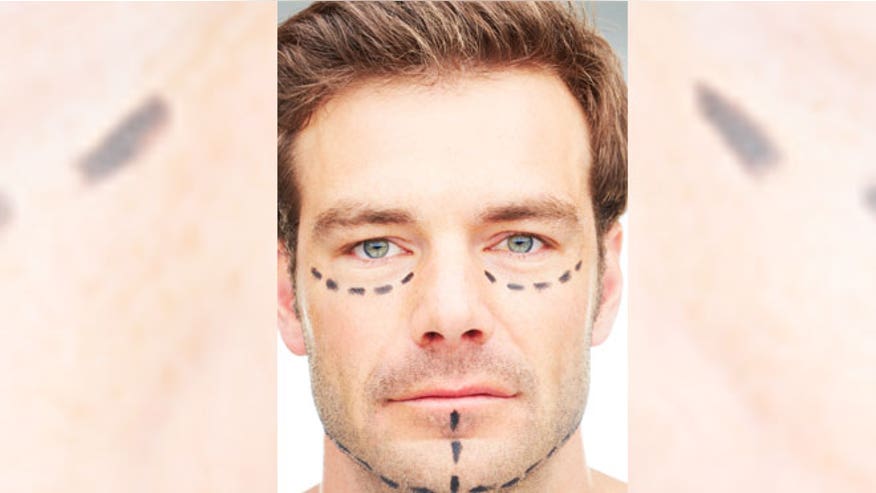
More men than ever before are booking spa appointments, buying skin care products and “manscaping.” Now, experts say there’s been a surge in the number of men between 40 and 70 years old who are making their way into the dermatologist’s office for cosmetic treatments, too.
In fact, men underwent more than one million non-surgical treatments such as Botox, photo rejuvenation and fat reduction in 2014, a report from the American Society for Aesthetic Plastic Surgery found. Plus, the number of cosmetic treatments for men increased 273 percent since 1997.
According to Dr. Ellen Marmur, a board-certified dermatologist based in New York City, out of more than 17,000 of her patients, the top ten who spend the most are men who have regular cosmetics treatments.   
When undergoing cosmetic procedures, some women don’t want their husbands to know and some are worried about what others will think or about looking unnatural. For men, the worry seems to be more about side effects— and less about what their wives think.
“Their wives are psyched— half the time it’s their wives who sent them in,” Marmur, who is also an associate clinical professor in the department of dermatology and the department of genetics and genomic research at the Icahn School of Medicine at Mount Sinai in New York City, said.
A stronger jawline and job security
Just as many women search for the eternal fountain of youth, a large group of men who opt for cosmetic treatments are executives who see it as a necessity to keep their edge.

“Men do things to look better because they’re competing in a younger job market,” said Dr. Doris Day, a board-certified dermatologist in New York City and author of “Forget the Facelift: Turn Back the Clock with Dr. Day’s Revolutionary Four-Step Program for Ageless Skin.”
Fathers of the brides are another group interested in enhancing their looks, spurred on by their wives and the cost built into the wedding budget.
What’s more, because there are many new minimally or non-invasive treatments that don’t leave scars, it’s a more attractive option for men, Day said.  

2 in 5 military women endure sexual trauma during service


In the U.S. military, women may be nearly 10 times more likely than men to experience sexual assault or harassment, a study of recent veterans suggests.
Researchers from the Department of Veterans Affairs (VA) surveyed more than 20,000 men and women who served during the conflicts in Iraq and Afghanistan. About 41 percent of women and 4 percent of men reported suffering some form of sexual harassment during their time in the military.
"Research among both civilians and those who have served in the military consistently find that rates of sexual assault and sexual harassment are higher among women than among men," lead study author Shannon Barth of the VA said by email.
"Despite the higher prevalence among women veterans, given the far greater number of men who have served in the military, there are significant numbers of both men and women who have experienced (sexual trauma)," Barth added.
One in five U.S. women and one in 71 men report being raped at some point in their lifetime, and among both genders, about one in 20 people experience other forms of sexual coercion and unwanted sexual advances, according to the Centers for Disease Control and Prevention.
Barth and colleagues assessed sexual trauma in the military as part of a health survey of recent veterans conducted between 2009 and 2011. Of 60,000 veterans invited to participate, 20,563 completed the questionnaire.
One survey item related to sexual trauma asked whether service members received uninvited or unwanted sexual attention such as touching, cornering, and pressure for sexual favors or inappropriate verbal remarks. Another item asked if anyone ever used force or the threat of force to initiate unwanted sex.
For both men and women, sexual harassment was far more common than assault, the study found.
Roughly 41 percent of women and 4 percent of men experienced sexual harassment, while about 9 percent of women and less than 1 percent of men said they were assaulted.

الجمعة، 11 سبتمبر 2015

Women lag men in medical research funds and faculty posts


Even though women now make up half of all U.S. medical school graduates, they remain much less likely than men to get research funding or become professors in medicine, two studies suggest.
Nationwide, men outnumbered women on U.S. medical school faculties by two to one last year, and men edged out women by almost five to one in achieving senior posts as full professors, according to one of the studies published in JAMA.
Women also appear to receive far less financial support for biomedical research early in their academic careers, a separate study of applications to one New England foundation suggests.
The studies serve as a reminder that the potential of women in medicine, like their peers in many other professions, has not been fully realized, Dr. Carrie Bylington of the University of Utah in Salt Lake City argues in an accompanying editorial. To represent the diverse communities they serve, academic medical centers should champion diversity among their students, faculty and staff, she writes.
"At least two major roadblocks lead to gender disparities in academic medicine," said Dr. Anupam Jena, a health policy researcher at Harvard Medical School in Boston.
"First, institutional resources, mentorship and biases generally favor men over women, hence making it harder for women in academic medicine to be as productive in research," Jena, lead author of the study of medical school faculties, said by email.

4 secrets your man might be keeping from you


He Wants More Sex
Most of us feel closer and more emotionally connected to our significant others through sex, so take note if the physical side of your relationship has hit the wayside. If you rarely initiate, are constantly tired or seem too busy to get busy, he might get moody or irritable, says Goldstein. “Whenever couples come into my office, one of the first things I ask them is, ‘How is your sex life?’” she says. “It’s a simple question, but it tells me a lot—especially the husband’s answer.”

According to Goldstein, a lot of men will express some discontent—and women will counter with total shock. Many women don’t even realize there’s been a drop-off in bedroom activities. If you can’t remember how long it’s been since you last had sex, there’s a good chance he’s taken note of the drought.
He's in Financial Trouble
If he just took a significant pay cut or he’s facing layoffs at work, he may withdraw, according to counselor and psychologist Karla Ivankovich, PhD, an adjunct professor at the University of Illinois, Springfield. “Men have been handed a gender role that assigns the task of providing,” she explains. “So in his mind, the difficulty with the finances may signal a failure on his part.”

Ivankovich says he’ll be singularly focused on fixing the problem at hand. He may nitpick purchases or appear distant and distracted until he finds a resolution—and even then, he may not willingly discuss the problem. “If it’s ‘fixed,’ he probably won’t see the need to belabor the point,” Ivankovich says. Some women may never know there was a worry.
 

He's Not Moving Up the Ladder at Work
Men attach a huge chunk of their value and self-worth to their jobs. So if your guy was passed over for a promotion, or didn’t get the recognition he thought he deserved on his last project, you might have a very moody man on your hands. “Men need to feel good about their professional status,” Goldstein says. “If he’s not excelling at the pace he’d like, he may be feeling less confident, less talkative and more depressed.”

Again, since you’re not involved in his day-to-day office life, Goldstein says that he may not see how it could help to get you involved. But if you think he could use a sounding board, try asking how things at work are going. (Ask it at night, after he’s had some time to decompress from the day.) Learn his cues and adjust: can you bond through distraction or does his mood improve with a little venting?    
He Has a Health Concern
While women can be pretty good about identifying symptoms, getting checked by a doc and then worrying while she waits for a status report, a man may find a symptom, skip step two and just settle at worrying (or ignoring). “The longer you fail to address health concerns, the more concerns there will be with reversibility,” says Ivankovich.

And get this: when asked to pick one health issue that men fret about most, Ivankovich points to erectile dysfunction. “Rather than address that, many will start arguments to avoid sex,” she says. “They became anxious and depressed, which only exacerbates the inability to achieve or sustain an erection.”
In terms of getting him to ‘fess up to any of the above, Goldstein says it really depends on the guy. Only in a calm moment, try broaching the topic either generally (“Something seems off with you lately…”) or directly, if you have a hunch. But if his grumpy attitude seems indefinite or he starts taking out his frustration on you, then it’s time to see a counselor, says Goldstein.
And if he’s keen to stay silent for a time, give him some space. “You can only push so much,” she says. “You have to stay respectful of his boundaries. Some men don’t like to talk it out, and that’s okay.” He’ll probably come back around just as soon as he sorts it out mentally—something often done solo. Just let him know that you’re always available as a safe, judgment-free person to vent to.

الخميس، 10 سبتمبر 2015

US Air Force vet’s photo of soldiers breast-feeding goes viral


When Tara Ruby was on active duty in the U.S. Air Force from 1997 to 2001, the military didn’t offer support for breast-feeding mothers. To show how far the military has come— the Fort Bliss Army Post has a new nursing room— she recently posted a photo on social media of 10 active duty soldiers breastfeeding their babies.
The photo, which has received over 11,400 likes on Ruby’s Facebook page and over 12,300 likes from Breast-feeding in Combat Boots’ Facebook page, shows the women wearing boots and camouflage as they feed their children.
Ruby, now a professional photographer in El Paso, Texas, sought active duty mothers using the Army Public Health Center’s Pregnancy and Postpartum Physical Training (P3T) Program, which aims to help soldiers maintain physical fitness levels during and after pregnancy. According to their website, P3T draws exercise recommendations from the American Congress of Obstetricians and Gynecologists and the 2008 Physical Activity Guidelines for Americans.  She also worked with Breast-feeding in Combat Boots, a veteran-owned and operated support group.
"I thought it was be nice to offer some photographs as an additional show of support," Ruby told CNN. "Seeing a picture like that helps mothers understand they can be an active soldier and provide support to their children."
According to CNN, Fort Bliss Public Affairs and Garrison Command approved the shoot. A U.S. Army spokesman told CNN there is no policy that prevents women from breast-feeding in uniform as long as they “maintain professional standards.”
On Thursday, Ruby posted the photo on her Facebook page and it was removed, for reasons Ruby doesn’t know, by Friday morning. It was also removed from other pages that shared the image. Ruby reposted the photo on Friday morning, thanking supporters.
"Juggling the tasks and expectations of a soldier, plus providing for their own in the best way they possibly can, makes these ladies even stronger for it,” she wrote on her wall.

الأربعاء، 9 سبتمبر 2015

6 ways you’re making your menopause symptoms worse


Hate to break it to you, but there's someone screwing you over in the hot-flashes department. Yep, it's you. For starters, we're guessing you don't get your menopause info from an expert source. Your doctor means well, we promise, but chances are her specialty isn't the Big Change. Your best bet is finding a certified menopause practitioner near you at menopause.org. (Looking for ways to ease your menopause symptoms? Then check out The Natural Menopause Solutionfor simple, effective tips.)
In the meantime, you can set yourself up for success by avoiding the all-too-common pitfalls below. Here are some of the major menopause no-nos you might be guilty of:
1. You're not telling your doc about your supplements.
And who could blame you? In a recent North American Menopause Society study, some 53 percent of women said they've tried everything from vitamins and herbal supplements to acupuncture and massage to help with hot flashes, anxiety, pain, fatigue, and other disruptive menopause symptoms.

The issue is that it's tricky to know just what you're getting, since supplements aren't FDA regulated, said ob-gyn Dr. Kathryn Macaulay, director of the Menopause Health Program at the University of California–San Diego and a clinical professor of reproductive medicine at the UCSD Medical Center.
That doesn't mean they can't help; black cohosh, for example, has some pretty substantial research behind its ability to ward off hot flashes. But she recommends telling your doctor what you're trying, so at the very least she can direct you toward a reputable brand.
2. You're ignoring the basics.
How much sleep did you get last night? How much water have you been drinking? How off the wall is your stress right now? There's nothing groundbreaking about age-old health wisdom about eating your veggies, getting enough sleep, and taking time to chill, but sticking to the fundamentals can dramatically reduce the severity of your most exhausting menopause symptoms.

Macaulay suggested preparing ahead of time: Get close to your ideal body weight before you enter the menopause home stretch. Metabolism and hormonal changes make it that much harder to whittle your middle after menopause. (Take a look at this new, easy science-backed way to lose 10 pounds—no dieting or exercising required.)
3. You're banking on those hot flashes passing—and quickly.
"Sure, I'm drowning in my own sweat," you think, "but I can put up with a year of this, I'm tough!" Sorry to burst your perspiring bubble, but you're likely to be facing more than a yearlong sentence: Hot flashes actually seem to last more like seven years (seriously, sorry). We get that you want to look tough—it's just a little sweat right?!—but seven years is a long time to be carrying around that battery-operated fan you've got in your purse.

If hot flashes are causing big-time disruption—in sleep and in your day-to-day, once-sweat-free life—stop waiting it out and look into treatment options, says Macaulay.

الثلاثاء، 8 سبتمبر 2015

Vaginal mesh slings for incontinence fail in about 3 percent


About one in 30 women who get a common type of vaginal surgery to address urinary incontinence will need repeat procedures within 10 years to remove or replace mesh slings inserted to prevent leaking urine, a study finds.
This risk is considered low, the authors note.
Patients fared best when they had slings inserted by surgeons who did the highest volume of these procedures. These patients were 37 percent less likely to need repeat procedures, the study found.
Women should make sure they know what their surgeon's past experience has been, lead researcher Dr. Blayne Welk of Western University in London, Ontario said in an email.
Millions of women develop urinary stress incontinence when muscles and tissues that support the bladder weaken. Simple actions such as coughing, running or lifting heavy objects can put pressure on the bladder and cause urine to leak. The risk increases with age, obesity, and multiple vaginal childbirths.
In the U.S., an estimated one in seven women will get surgery for urinary stress incontinence during their lifetime, Welk and colleagues note in JAMA Surgery.
While long-term follow up of some of the first women to get the slings found few complications after more than 17 years, some previous research has linked the devices to chronic pain, fistulas, and mesh erosions into the urethra or vagina, the researchers note.
Treatment of these complications can require repeat surgeries to remove or replace the devices, a possibility that regulators in the U.S. and Canada have highlighted in warnings to consumers and advised surgeons to explain to patients considering these procedures. In the U.S., more than 50,000 women have joined class action lawsuits related to complications with vaginal mesh.
Given the warnings, Welk and colleagues set out to examine reoperation rates and to assess how the surgeon's training and experience might influence the results. Overall, they looked at data on 59,887 women who had mesh slings implanted by nearly 1,000 different surgeons between 2002 and 2012.
After an average follow-up of five years, 1,307 women, or 2.2 percent, had needed a reoperation. However, when women were followed for 10 years, that rate rose to 3.3 percent.